
“The measure of intelligence is the ability to change.” – Albert Einstein
In 2025, this insight feels especially true when applied to the workplace. Teams today are rethinking everything, from how they collaborate to where they choose to work. The idea of the office has transformed from a fixed location to a flexible strategy.
Businesses are now approaching workspace decisions with a sharper lens. They’re looking for setups that offer flexibility, deliver reliability, and give them the space to grow. Companies are actively weighing the pros and cons of virtual office vs coworking, coworking vs traditional office, and every variation.
How Work Culture Has Evolved
The focus of modern teams is now on adaptability, access, and infrastructure that doesn’t slow you down. A space that empowers a team to work well, no matter their rhythm, is becoming the standard expectation.
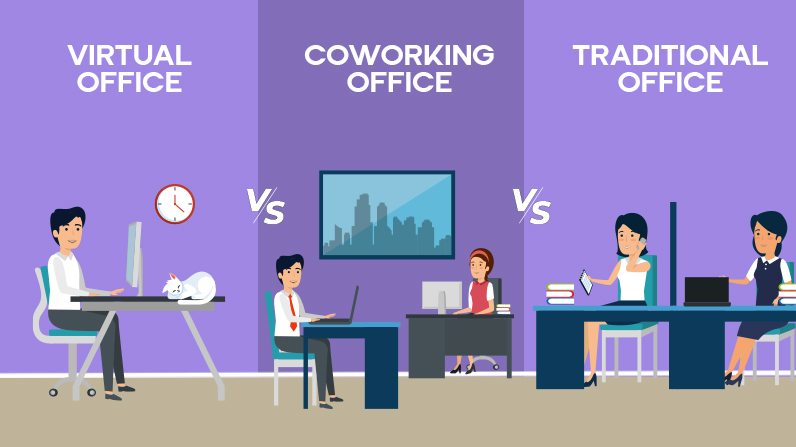
As a result, companies are exploring different types of office spaces, some familiar, some new. The three that dominate conversations today are virtual offices, coworking environments, and traditional offices. Each answers different needs, and the right fit depends on how your team operates now and in the future.
Virtual Offices: Light and Remote, But Limited
For many startups and remote-first teams, virtual offices offer a straightforward solution. They’re cost-effective, quick to set up, and ideal when physical presence isn’t necessary. You get a registered business address, call handling, and sometimes the option to book a room for meetings.
This makes sense for early-stage ventures or solo professionals. However, when evaluating virtual office vs. coworking, one notices the gaps. Virtual offices may help you exist on paper, but they rarely provide the energy, consistency, or collaboration tools that fuel a growing team.
A lack of physical infrastructure becomes more noticeable over time. Team bonding, brainstorming, and even daily communication can feel fragmented. When comparing a virtual office vs a traditional office, businesses often find that the simplicity of virtual quickly gives way to the need for more tangible, day-to-day support.
Traditional Offices: Familiar, Yet Demanding
Traditional offices offer structure, predictability, and a sense of permanence. This was the gold standard for decades: private desks, assigned meeting rooms, and long leases that anchored companies to one location.
This model works for businesses prioritising routine, confidentiality, or deep process-based operations. Yet traditional setups come with significant friction for many others, especially those in growth phases. High overhead costs and long-term commitments can restrict agility.
When considering coworking vs traditional office, the difference in flexibility stands out. In conventional spaces, scaling up or downsizing is a challenge. Moving fast, whether to onboard a new team or adjust to a hybrid model, often requires months of planning and significant resources.
Coworking Spaces: Flexible, Functional, and Built for Today
Coworking has evolved into the workspace model that teams actively choose today. They combine reliable infrastructure with flexible terms, allowing businesses to operate with structure while adapting quickly to change.
This is where the virtual office vs coworking conversation becomes relevant again. Coworking offers more than just a desk. It provides community, amenities, meeting spaces, and tech support with minimal setup time. Coworking is a clear step forward for teams that need collaboration, stability, and convenience in one place.
The differences come into sharper focus in terms of coworking vs. traditional office. Coworking offers built-in operational support, reception services, housekeeping, IT troubleshooting, and facility management, so your team can focus on work instead of running an office. There’s no need to set up vendor contracts or worry about managing utilities and repairs.
There’s also a strong sense of flexibility. Need to expand your team for three months? You can add seats without renegotiating a lease. Want to downsize post-project? Adjust your plan with ease. Traditional offices rarely provide this level of agility, often locking businesses into long-term contracts and fixed square footage regardless of team size.
Coworking spaces also offer a built-in professional community. Startups, freelancers, SMEs, and enterprise teams often work side by side, creating unexpected opportunities for networking and collaboration. Traditional offices can feel siloed, but coworking environments introduce energy and interaction that benefit morale and innovation.
In a city like Mumbai, being in the right place matters. A well-connected coworking space in Mumbai puts your team near key clients, partners, and networks. That centrality offers a competitive edge for companies operating across regions or hosting out-of-town visitors.
Design That Enhances Work
Coworking spaces are designed with intention. They reflect how people work, with zones for deep focus, corners for collaboration, and breakout spaces for informal chats or solo downtime.
Professionals want more from their surroundings, and modern coworking spaces deliver. There’s natural lighting, comfortable furniture, clean aesthetics, and a layout that supports different moods and energy levels throughout the day.
For growing businesses, a shared office space in Mumbai enhances experience, retention, and day-to-day satisfaction.
Around-the-Clock Access and Built-In Wellness
One major advantage of coworking is access. Many of these spaces remain open 24/7, recognising that not every team member works best simultaneously. Whether it’s a quiet morning session or a late-night push to wrap up a project, the space is ready and operational. This kind of flexibility is central to how modern teams function, especially in a coworking space in Mumbai, where work rhythms can be as diverse as the city itself.
Coworking spaces such as Dextrus offer secure, round-the-clock access that caters to early risers and night owls alike. It ensures your productivity. Stay productive on your terms, no matter the hour.
Wellness is also taking centre stage. Today’s coworking spaces offer quiet nooks and breakout zones that encourage better habits and support mental clarity. At Dextrus, these features are built into the experience, helping members manage energy and focus throughout the day. They’re not afterthoughts, but an essential part of a workspace designed for real people doing real work.
Sustainability and Smarter Workspaces
As businesses become more value-driven, sustainability is influencing where and how teams choose to work. From design choices to daily operations, workspaces are expected to reflect a commitment to better environmental practices. Many coworking providers are rising to meet this expectation by incorporating energy-efficient lighting, low-impact materials, and responsible waste systems.
When viewed through the lens of traditional office vs coworking space, coworking clearly offers more than just flexibility. It’s increasingly aligned with the experience professionals want and the impact companies aim to create.
Making the Right Call for Your Team
There’s no universal answer when choosing between coworking vs traditional office or virtual office vs coworking. Every company must weigh its culture, size, pace of growth, and operational rhythm.
Virtual offices are minimal and budget-friendly but often fall short on infrastructure, making it harder to scale or collaborate consistently. Traditional offices offer routine and permanence, yet can become restrictive and costly to maintain in a fast-changing environment.
Coworking, meanwhile, brings together everything modern teams expect: flexibility, innovative design, built-in support, and strategic location, all within a curated, community-first environment. It allows for structured autonomy: freedom with support, movement with momentum.
This is where Dextrus helps teams take their next step with confidence. Whether you’re an early-stage startup or a growing team, its thoughtfully designed workspaces give you the foundation to operate efficiently while staying agile.
A Space That Moves with You
The workplace today is a part of your company’s ecosystem. The right space allows your team to grow, shift, and evolve without slowing down. That’s what separates adaptive office solutions from legacy setups.
If your team is seeking a workplace that combines clarity and calm, collaboration and quiet, structure and fluidity, coworking offers a compelling way forward.
And if you’re exploring a premium coworking space in Mumbai, Dextrus is worth a closer look. With beautifully designed interiors, robust infrastructure, and flexible plans across prime locations, it supports exactly what the future of work demands. Whether you’re comparing virtual office vs coworking or weighing the benefits of coworking vs traditional office, Dextrus creates space for teams to thrive at their own pace, on their terms.