

Have you ever noticed how some people need complete silence to concentrate while others work better with a bit of background noise, like a TV playing softly or the hum of a coffee shop?
If you’ve ever felt more focused in a cafe than in a silent home office, you’ve experienced the ‘alone together’ effect. It’s the idea that being around others, even without directly interacting, can boost motivation, reduce loneliness, and improve concentration.
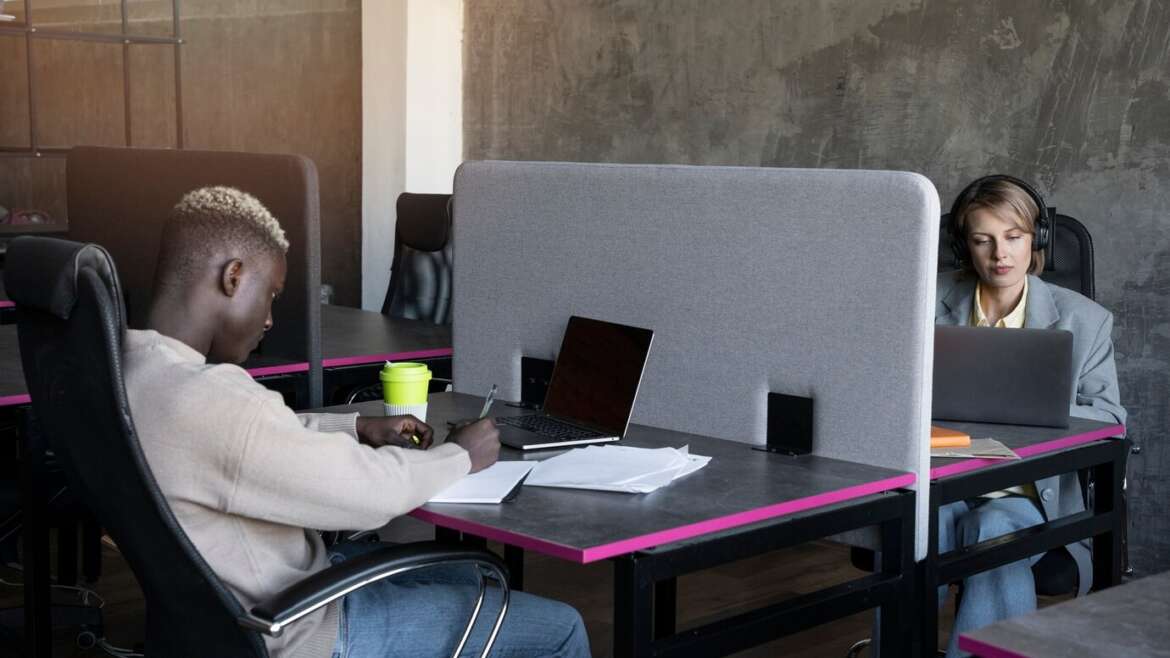
Coworking spaces work on this very psychology. They offer a structured yet flexible environment where professionals can work independently without feeling isolated. The gentle social presence of others provides a sense of community without the rigid constraints of a traditional office.
But why does this balance work so well, and how do coworking spaces design their environments to support productivity, deep work and organic interactions?
The Psychological Underpinnings of ‘Alone Together’
The effectiveness of the ‘alone together’ concept in coworking spaces is rooted in several psychological phenomena:
-
Social Facilitation
This theory suggests that the mere presence of others can influence an individual’s performance. Early studies, such as those by Norman Triplett in 1898, observed that cyclists performed better when racing alongside others than when alone. In coworking spaces, this translates to heightened motivation and efficiency simply by being around others who are working diligently.
-
Social Presence Theory
Developed by Short, Williams, and Christie, this theory explores how communication mediums impact communication. In physical coworking spaces, the tangible presence of fellow professionals creates a sense of community and belonging, even without direct communication. This perceived social presence can alleviate feelings of isolation common in remote work scenarios.
-
Proxemics
Introduced by Edward T. Hall, proxemics examines how physical space affects human interactions. Coworking spaces often utilise this understanding by offering flexible seating arrangements and designated quiet zones, allowing individuals to choose their preferred level of proximity to others. This flexibility supports personal comfort and effective work habits.
How Coworking Spaces Create the Perfect Balance
1. The Ability to Work Independently Without Isolation
One of the key benefits of coworking is that it allows professionals to focus on their tasks while still being surrounded by a working atmosphere. Unlike a home office, where distractions can range from household chores to unexpected visitors, coworking spaces provide a dedicated work environment designed to support productivity.
At the same time, coworking spaces avoid the downsides of traditional offices, where constant interruptions, meetings, and office politics can break concentration. Here, professionals can work independently while still benefiting from the motivating presence of others.
2. The Subtle Benefits of Social Presence
Humans are inherently social creatures. Even when we don’t actively engage in conversation, being around others who are also working can create an atmosphere of shared purpose. This effect, known as ‘passive socialisation,’ has been shown to reduce feelings of loneliness.
A coworking space provides a work-focused environment where people can be surrounded by like-minded professionals without the pressure to socialise. If needed, a quick chat over coffee or an impromptu brainstorming session is just a few steps away, but there’s no expectation to engage.
3. Structured Yet Flexible Spaces for Deep Work
Coworking spaces are designed with a mix of open seating, private booths, and quiet zones to accommodate different work styles. The ability to move around in social yet independent work environments allows individuals to tailor their surroundings to their current work needs, whether that’s deep focus, casual collaboration, or a change of scenery to break mental blocks.
Studies on workplace productivity suggest that having control over one’s work environment significantly enhances focus and efficiency. Coworking spaces provide this flexibility for productivity, letting members choose where and how they work best.
4. How Low-Level Social Engagement Boosts Motivation
Even minor interactions like exchanging a nod with a fellow coworker or sharing a quick coffee break can have positive psychological effects. These low-level social engagements provide a sense of belonging without disrupting work. Research has shown that brief social interactions can improve mood and job satisfaction, making coworking spaces an ideal setting for those who need a mix of focus and occasional connection.
Designing Coworking Spaces for Productivity and Comfort
1. Quiet Zones, Focus Pods, and Library-Style Workspaces
Coworking spaces often include designated quiet areas to support professionals who require deep concentration. These spaces minimise distractions and provide an alternative to open seating areas, ensuring that members have access to environments tailored to their work style.
2. Flexible Seating Arrangements for Personal Space
Unlike traditional offices, coworking spaces offer a variety of seating options that cater to different preferences. Some professionals thrive in communal settings, while others prefer personal desks or private offices. This flexibility makes coworking ideal for both extroverts and introverts.
3. The Role of Lighting and Layout in Supporting Focus
Good workspace design also involves lighting, acoustics, and spatial layout. Bright, natural lighting reduces eye strain and boosts energy levels, while strategically placed seating areas prevent overcrowding and noise disturbances. Many coworking spaces invest in ergonomic furniture and soundproofing for comfort and focus.
4. Opportunities for Organic Networking Without Forced Interactions
One of the defining features of coworking spaces is that networking happens naturally rather than being imposed. Unlike corporate offices, where networking events can feel obligatory, coworking spaces foster casual, organic connections through shared amenities, communal lounges, and industry-specific meetups.
This allows members to interact at their own pace, whether that’s joining a discussion, exchanging ideas over lunch, or simply observing and absorbing new insights from the professional community around them.
The ‘alone together’ concept explains why coworking spaces are such effective work environments. They provide a structured yet flexible setting where professionals can work independently while benefiting from the social presence of others. Coworking spaces strike the perfect balance between solitude and connection by offering a mix of quiet zones and collaborative areas.
If you’re looking for a workspace that fosters deep work while keeping you connected to a vibrant professional community, Dextrus offers thoughtfully designed coworking solutions tailored to modern work needs. Find the right balance of solitude and collaboration at Dextrus.